Aurelio Mateo-Alonso
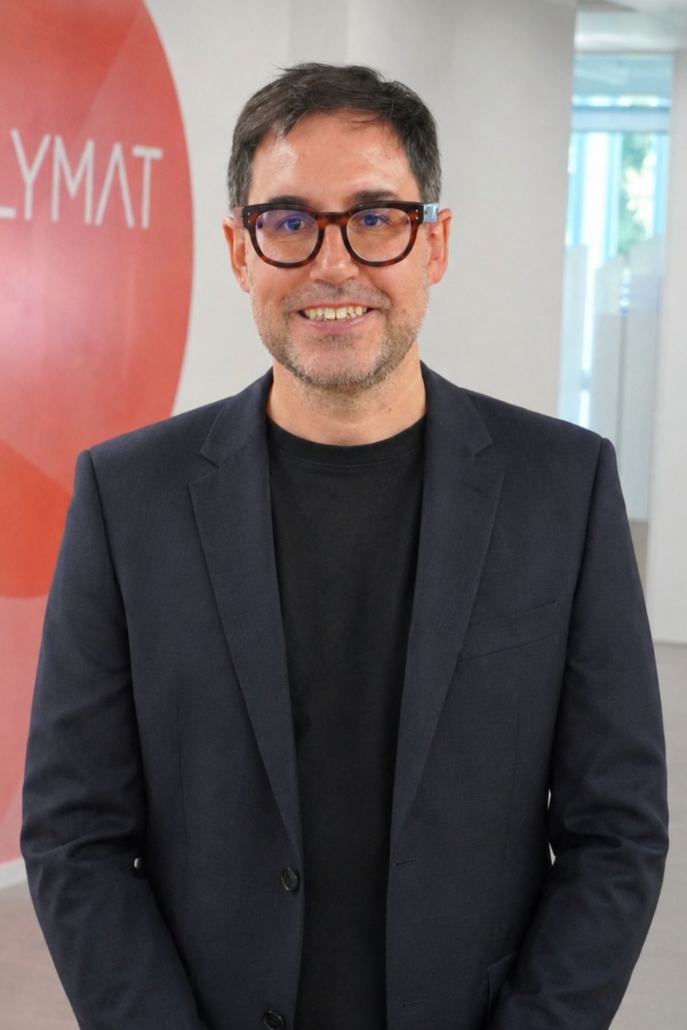
Dr. Aurelio Mateo-Alonso “Koke” is an Ikerbasque Research Professor and head of the Molecular and Supramolecular Materials Laboratory at POLYMAT, a position he has held since 2012. He is also a Distinguished Professor at the University of the Basque Country (EHU). He earned degrees in Organic Chemistry from the Universidad Autónoma de Madrid and completed his PhD in Chemistry at Queen Mary University of London in 2004. After postdoctoral research at the University of Trieste, he became an independent group leader at the Freiburg Institute for Advanced Studies before joining POLYMAT.
His research focuses on the synthesis and supramolecular chemistry of π-conjugated systems in one, two, and three dimensions. His work includes polycyclic aromatic hydrocarbons, nanographenes, graphene nanoribbons, fullerenes, carbon nanotubes, mechanically interlocked structures, supramolecular and conjugated polymers, and covalent organic frameworks. He also studies their integration into molecular and optoelectronic devices, developing materials with tailored structural and electronic properties.
Professor Mateo-Alonso has delivered more than 50 invited and keynote lectures, published over 120 scientific articles and 11 book chapters, and secured more than €7 million in competitive funding. He received an ERC Consolidator Grant and has coordinated four European projects under programmes including EIC Pathfinder Open, FET-Open, M-ERA.NET, and ERA-Chemistry.
Throughout his independent career, he has supervised 57 researchers, including postdoctoral fellows, PhD candidates, Master’s students, and undergraduates. He has also organized several editions of the international POLYMAT Spotlight conference and, since 2025, has served as Associate Editor of the Beilstein Journal of Organic Chemistry.
His distinctions include election as a Corresponding Member of the Spanish Royal Academy of Sciences in 2025, the Research Excellence Award of the Spanish Royal Society of Chemistry, and several national and international young investigator awards. These achievements reflect his contributions to molecular materials chemistry, research leadership, international collaboration, scientific mentoring, and academic service.

